

Devastating floods in South Sudan in recent months left thousands of herders without their most precious possessions: goats, cows and cattle. The animals are central to peoples lives and age-old customs including marriage and cultural traditions. All risk being swept away or scorched by the ravages of climate change.
The United Nations Environment Programme (UNEP) warned today that by the year 2050, up to 80 per cent of the Arctic would be affected by mining, oil exploration, and other man-made impacts if the industrialization of one of the world's last wilderness areas continued at current rates.Transitioning to renewable energy is the key to securing humanitys survival, as without renewables, there can be no future,accordingto UN Secretary-GeneralAntnio Guterres, ahead of theInternational Day of Clean Air for Blue Skies, marked on 7 September.
Extreme weather and climate change impacts are hitting every single aspect of socio-economic development in Africa andexacerbating hunger, insecurity and displacement,the UN World Meteorological Organization (WMO) said on Monday.
WMOsaid that average surface temperature across Africa in 2024 was approximately 0.86C above the 19912020 average.
North Africa recorded the highest temperature - 1.28C above the 1991-2020 average;it is the fastest-warming sub-region of Africa.
Marine heat spike
Sea surface temperatures were also the highest on record. Particularly large increases in sea surface temperatures have been observed in the Atlantic Ocean and Mediterranean Sea, WMO said.
Data shows that almost the entire ocean area around Africa was affected bymarine heatwaves of strong, severe or extreme intensity last year andespecially the tropical Atlantic.
Head of WMO, Celeste Saulo, warned that climate change is anurgent and escalatingproblem across the African continent with some countries grappling with exceptional flooding caused by excessive rainfall and others enduring persistent droughts and water scarcity.
El Nio influence
Highlighting Africas particular vulnerability to our warming planet caused mainly by rich nations burning fossil fuels the UN agency said thatfloods, heatwaves and droughts forced 700,000 people out of their homes across the continent last year.
WMO also noted that the El Nio phenomenon was active from 2023 into early 2024 and played major roles in rainfall patterns across Africa.
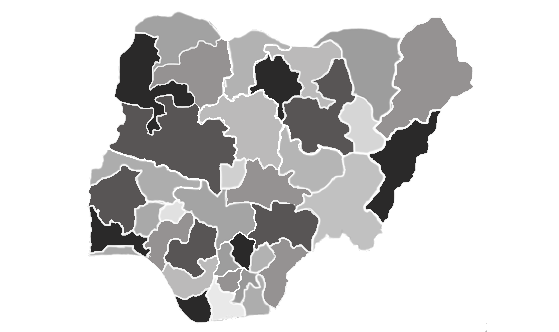
In northern Nigeria alone, 230 people died in floods last September that swept across the capital of Borno state, Maiduguri, displacing 600,000, severely damaging hospitals and contaminating water in displacement camps.
Regionally, rising waters caused by torrential rainsravaged West Africa and impacted a staggering four million people.
Conversely,Malawi, Zambia and Zimbabwe suffered the worst drought in at least two decades, with cereal harvests in Zambia and Zimbabwe 43 per cent and 50 per centbelow the five-year average, respectively.
Heat shock
Heatwaves are also a growing threat to health and development and Africa, WMO said, noting that thepast decade has also been the warmest on record.Depending on the dataset, 2024 was the warmest or second-warmest year.
Blistering temperatures already impact childrens education, with schools closing in March 2024 in South Sudan as temperatures reached 45C. Worldwide, at least 242 million pupils missed school because of extreme weather in 2024, many of them in sub-Saharan Africa, according to the UN Childrens Fund,UNICEF.
Beyond education, rising temperatures across the continent are making Africa more water-scarce and food-insecure, with North African countries the hardest-hit.
South Sudan focus
Erratic weather patterns across Africa are also hindering farming, driving food insecurity and displacing people who have already had to flee war already, WMO explained.
Last October, for example, flooding affected 300,000 people in South Sudan a hefty figure for a nation of 13 million, scarred by years of civil strife and where infrastructure is poor.
The disaster wiped out cattle, adding up to between 30 and 34 million farm animals roughly two per inhabitant and stagnant water fuelled diseases.Families who had been self-sufficient had to seek help once again.
When someone slides back into being fed, it affects their dignity,said Meshack Malo, South Sudan Country Representative for the UN Food and Agriculture Organization (FAO).
At the forefront of climate change, the troubled East African country is already dealing with a crippling economic crisis, mass displacement made worse by the war in neighbouring Sudan, as well as escalating tensions at home and pervasive violence.
Fighting in Sudan has derailed the South Sudanese economy, which relies on oil exports for 90 per cent of its national revenue, reports indicate.
Destructive cycle
When South Sudan is not hit by floods, it is plagued by drought.
This cyclic change between floods and drought, makes the country affected almost a good part of the year, said Mr. Malo.
Flooding has worsened and become more intense and frequent in recent years.
That means that any short rain then can easily trigger the flooding, because water and the soil remain quite saturated, Mr. Malo added. So that intensity and frequency makes this situation worse.
With road access disrupted for aid trucks, UN agencies such as the World Food Programme (WFP) must airlift food assistance a costly, impractical solution, as humanitarian funding dwindles.
Pushing back
In the South Sudanese town of Kapoeta, the FAO has helped to reduce the number of dry months from six to two, by harvesting and storing water to protect crops at risk from climate change.
The impact of drought is no longer felt as much, FAOs Mr. Malo said, speaking to from the capital, Juba.
Worth its salt
In countries that lack water resources for crop irrigation, climate resilience and adaptation are critical, Dr. Ernest Afiesimama of the WMO Regional Office for Africa in Addis Ababa, told journalists.
And while desalination the process of removing salt from seawater may be a solution for some, for many African nations it is not viable.
Rather than turning to desalination as a panacea, investing in adaptation measures including early warning systems for action and preparedness is urgently needed, environmental scientists say. Considering the challenges in sub-Saharan Africa, [desalination] presents a complex economic, environmental and social challenge, and there is a question about its long-term sustainability and equity, said Dr. Dawit Solomon, Contributor atAccelerating Impacts of CGIAR Climate Research for Africa (AICCRA).
Africa is facing a high climate change bill. Imagine the continent which is struggling economically and then facing this additional risk multiplier, Dr. Salomon added.