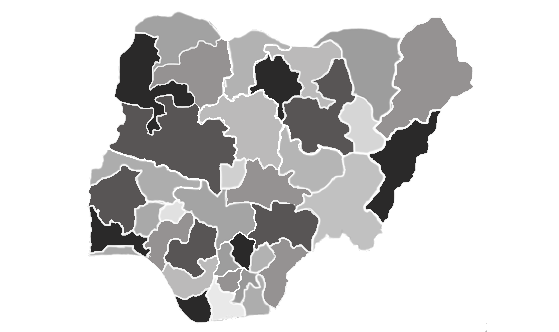



Ejigbois located northof Nigeria's economiccapital,Lagosand morethan350kilometresfromitsFrench-speakingneighbour, Benin.
In the streets here,where the official language is English, one can hear what is called 'petit franais': a clever mix of words in Yoruba and Baoul, all interspersed with French words.
Although surrounded by French-speaking countries such as Benin, Niger, Cameroon and Chad,Nigeriahas very few French speakers, even though teaching the language is in theory compulsory up to secondary school.
But there is a severe shortage of teachers.
LinkswithAbidjan
Sincetheearly20th century, theinhabitantsofEjigbohave beenmigratingto French-speakingcountriessuchas Benin and Togo, butaboveall toCote dIvoire.
Manyresidentsholddualnationalityanddividetheirtimebetweenthetwocountries.Threetimes aweek, buses cover the 1,200kilometresbetweenEjigboandAbidjan.
Somuchsothatitiscommonforshopkeepersand restaurantownerstoacceptCFA francstopayfor a bowl ofattikfermentedcassavasemolina a typical Ivorian dishfrequentlyfound inEjigbo.
Street French
AkanbiMudasiruIlupejuisa professor of French and sociolinguistat theFacultyof Arts at theUniversity of Lagos,whohailsfromEjigbo.
Heexplainsthelinguisticspecificity of Ejigbo, a town where he was born:
"InEjigbo,peopledontjustspeakone type of French. Itis,letssay, aslangyFrench or a morerelaxedFrench."
He emphasises: "There is standard French, the kind that everyone can understand well, which is reserved for the elite - those who have been to school, students, or nationals from French-speaking countries living in Ejigbo.
"ThereisalsostreetFrench:a mix of the nationallanguagesof the country the speaker haslivedin.Especiallyin Abidjan,wherelocallanguagessuchas Baoul are mixed in."
French overtakes Arabic to become world's fourth most spoken language
MudasiruIlupejuadds:"Youll hear this version of spoken French in Ejigbo, particularly among speakers. Theres also the French spoken by illiterate people - those who never went to school but have spent time in French-speaking countries and returned home.
"Youll find grammatical errors and awkward structures, but its still understandable. Instead of saying l'homme (the man), they might say la homme or le femme. When you go to the market, youll come across all these different ways of speaking French."
This article was adapted from theoriginal versionin French by RFI correspondent Harmony Pondy Nyaga.
Originally published on RFI