

Humanitarian funding at a decade low as hunger, conflict and climate shocks converge
Dakar, 3 June 2026 - Across the Sahel, 24.3 million people are in critical need of humanitarian aid. They are mothers who cannot feed their children, families who have fled for their lives seeking safety with nothing, children who have not seen the inside of a classroom in years. Behind every number are people with lives, stories and dreams, and the world needs to do more to help them.
The UN's Office for the Coordination of Humanitarian Affairs (OCHA) today published the 2026 Humanitarian Needs and Response Overview (HNRO) for the Sahel, a comprehensive analysis of the crisis unfolding across Burkina Faso, Chad, Mali, Niger, the Far North of Cameroon, and Northeast Nigeria, and a stark warning about what happens if the international community does not step up.
Violence in the Central Sahel, is spreading beyond its traditional borders in Mali, Burkina Faso, and Niger and rapidly spilling over into coastal West Africa, rendering the Sahel one of the main epicentres of violence in Africa. This violence and instability are overwhelmin0g borders, straining local economies, and displacing vulnerable people. Armed groups have expanded their reach across the Central Sahel and the Lake Chad Basin, uprooting communities, shutting down schools and health centres, and leaving entire areas without any form of government or protection. Nearly 12,900 schools are closed due to insecurity, depriving over 2.3 million children of education and exposing them to exploitation and recruitment.
Climate shocks are compounding the suffering. The Sahel is warming faster than the global average. In 2025 alone, 590,000 people in the Sahel were affected by devastating floods, while prolonged droughts and desertification are destroying the farmland and millions of livelihoods depend on.
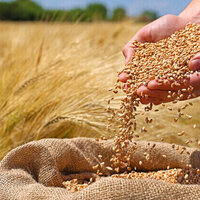
And then comes hunger. During the coming lean season, spanning from June to August, 15.4 million people are expected to face crisis levels of food insecurity or worse. More than 1.5 million of them could fall into emergency conditions, meaning they cannot meet basic food needs without urgent outside help. These numbers could climb even higher: the ongoing Middle East conflict is driving up global fuel, fertilizer and food commodity prices, with direct consequences for Sahelian families who are already stretched beyond their limits. A rise in fertilizer costs can wipe out an entire planting season. Rising fuel prices are rendering food and aid more expensive to deliver, just as the lean season is about to begin and food needs about to peak. These are not distant economic trends; they translate directly into empty plates.
Despite growing needs, humanitarian funding for the Sahel has collapsed to its lowest level in a decade. In 2025, only 29 per cent of required funding was received, forcing aid organizations to suspend services, pull back from some areas, and make impossible choices about who gets help and who does not.
"The people of the Sahel are not on the sideline of a global crisis, they are at the very heart of one of the world's most severe and neglected emergencies," said Charles Bernimolin, Regional Head of OCHA for West and Central Africa. "Every funding gap has a human cost. When we cut a programme, a child loses a meal, women and girls protection, a family loses hope. We cannot allow a financing collapse to become a death sentence for millions of people."
Humanitarian partners are already adapting, expanding cash assistance, strengthening early warning systems, and investing in local organizations who reach people where others cannot. But adaptation has limits.
"Solutions and capacity exist. We need further political will and funding to match the scale of the crisis," said Bernimolin. "We are calling on donors, governments and regional institutions to act with urgency. The people of the Sahel cannot wait."
OCHA is appealing for donors to provide flexible, predictable and adequate funding to sustain lifesaving operations across the region. Governments must protect civilians and guarantee unimpeded humanitarian access. Regional bodies must help address the structural drivers of instability.
For further information, please contact:
OCHA Regional Office for West and Central Africa, Dakar, [email protected]
Source: Reliefweb